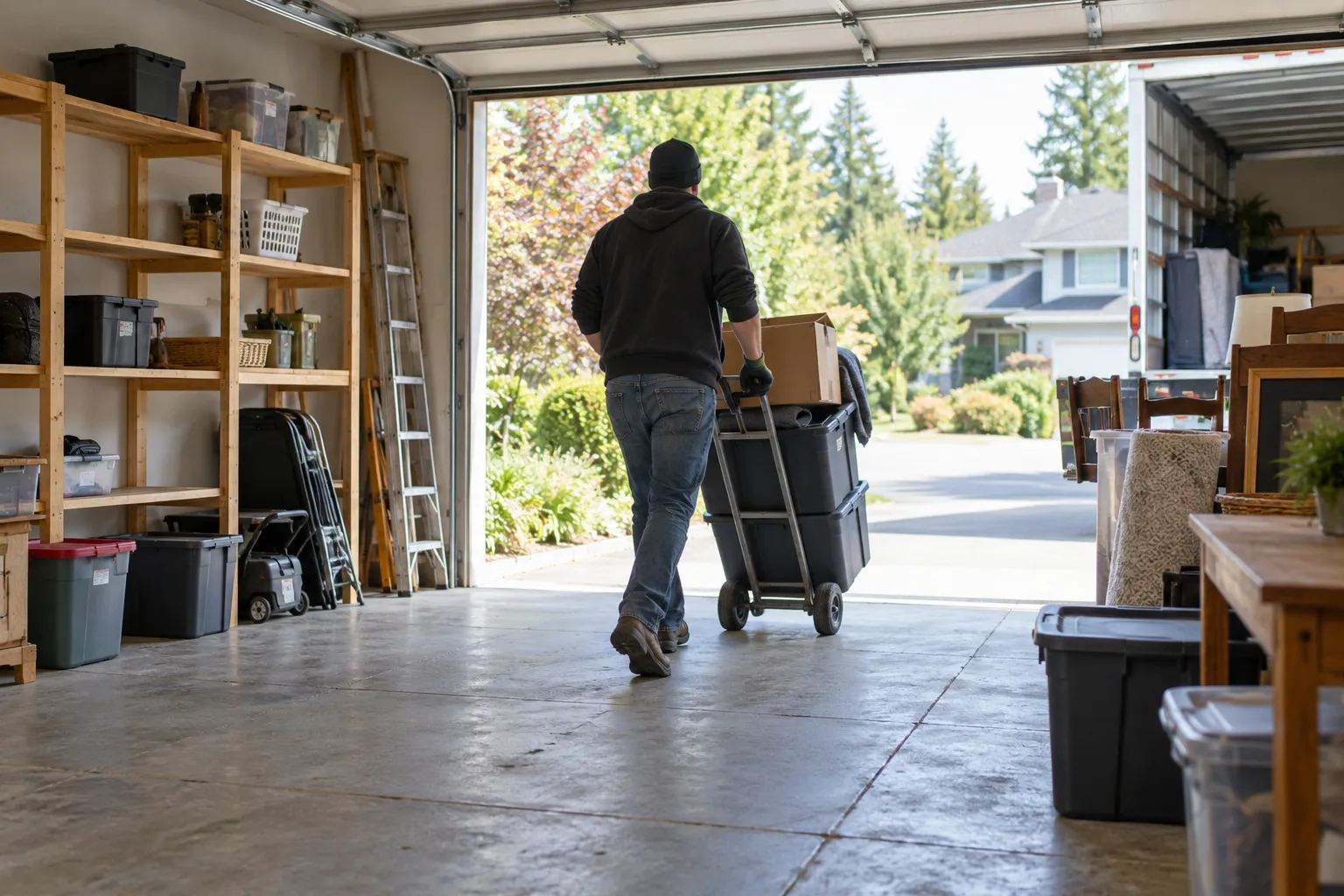
Sort by decision and risk, not by where an item happened to land. Keep chemicals separate, protect tools that stay, and preserve a clear route from the garage to the truck.
Create a safe lane first
Open a path from the deepest work area to the garage door without building unstable piles. Keep access to electrical panels, water shutoffs, and doors clear.
Move vehicles before sorting begins. Check overhead door clearance and remove trip hazards near the threshold.
Pull regulated materials out of the general pile
Paint, fuel, oil, pesticides, propane cylinders, automotive fluids, batteries, and similar materials should be identified before the cleanout. Local handling rules and provider acceptance vary.
Do not pour liquids together, conceal them in boxes, or place them in ordinary bags. Keep original labels when they are available.
Protect the things that belong in the garage
Mark tools, ladders, sports gear, seasonal bins, spare flooring, and homeowner documents that stay. Photograph valuable equipment and move small items to a locked or supervised zone.
If shelving stays, say so. If shelving goes, emptying it first may change the labor and volume estimate.
One-page garage checklist
- Vehicles moved and garage door tested
- Keep items tagged and grouped
- Chemicals and batteries isolated
- Attic hatch and utility panels accessible
- Driveway and curb plan shared with the crew
Need help with the property?
Review the companion garage cleanouts service, then call with the rooms, access, and deadline.
Call (202) 555-0124